How to Repair Broken Nails Without More Damage

A broken nail has a way of making even the most polished manicure feel suddenly unfinished. Whether it catches on a sweater, splits at the sidewall, or breaks just before a special event, knowing how to repair broken nails can protect your natural nail while keeping your hands looking refined.
The best fix depends on where the break sits, how deep it is, and whether you are wearing natural nails, gel polish, acrylic, Gel X, builder gel, or dipping powder. A small surface crack can often be stabilized at home. A painful break, however, deserves professional attention rather than a quick cover-up.
First, Decide Whether the Nail Is Safe to Repair
Before reaching for glue or polish, look closely at the break. If the nail is bleeding, separated from the nail bed, swollen, very tender, or split deeply into the pink portion of the nail, do not attempt to patch it with adhesive. Wash the area gently with soap and water, protect it with a clean bandage, and seek medical advice if pain, redness, warmth, or drainage develops.
For a break that is above the fingertip and not painful, the goal is simpler: smooth sharp edges, keep the crack from traveling, and avoid adding pressure that could turn a minor break into a larger one.
It can be tempting to pull off a lifted corner or clip the nail very short immediately. Resist the urge to tear it. Tearing can remove layers of the natural nail plate and leave it thinner, rougher, and more prone to future splitting.
How to Repair Broken Nails at Home
A home repair works best for a small crack or a clean break near the free edge. Think of it as a temporary measure to get you comfortably through the day or until your next manicure appointment.
For a small edge break
If only a small corner has snapped off, use a fine-grit nail file to soften the edge. File in one direction rather than sawing back and forth, which can create tiny fractures along the nail. Round the corner slightly so it is less likely to catch on hair, fabric, or a handbag zipper.
If the nail is now shorter than the rest, you may choose to gently file the other nails closer in length for a balanced look. This is often the most elegant solution for natural nails, especially if the break is too close to the fingertip to reinforce comfortably.
For a shallow crack above the fingertip
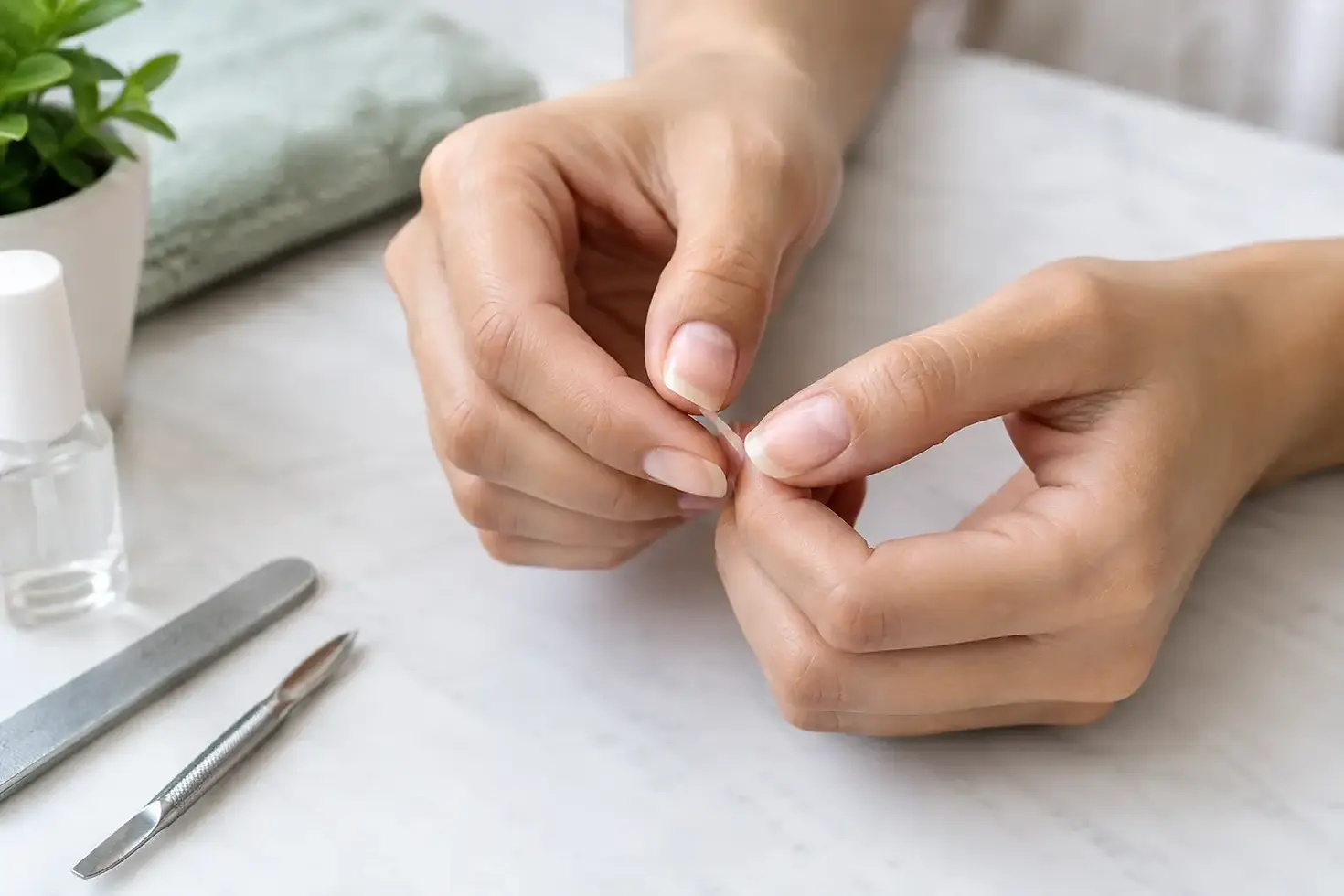
A tea-bag or silk-wrap patch can help stabilize a small crack until you can see a nail professional. Start with clean, dry nails and lightly buff only enough to remove surface shine. Cut a tiny piece of clean tea-bag material or nail wrap just large enough to cover the split.
Apply a thin layer of nail repair adhesive or clear base coat, place the patch over the crack, and press it flat with a clean tool. Add another light layer of adhesive or base coat, allow it to dry completely, then smooth the surface very gently with a fine buffer. Finish with clear polish or your chosen color.
This repair should feel smooth, not thick or bulky. If it lifts at the edges, remove it gently and have the nail assessed rather than repeatedly layering more product over the same spot.
For a deeper but painless split
If the crack is longer, reaches close to the fingertip, or keeps reopening, a salon repair is usually the wiser choice. A trained nail technician can evaluate the integrity of the natural nail and select a reinforcement method that suits your existing service. Depending on your nails, that may mean a careful builder gel overlay, an acrylic repair, a structured gel service, or a replacement extension.
The trade-off is simple: an at-home patch is convenient, but a professionally balanced repair is generally stronger, smoother, and less likely to snag. For an upcoming wedding, vacation, photoshoot, or celebration, it is often worth choosing the more reliable option.
Repairing a Broken Enhancement
Enhanced nails need a different approach because the visible crack may be in the product, the natural nail underneath, or both. Never use household super glue on an enhancement. It can irritate skin, trap moisture, and make proper removal more difficult.
Acrylic and dipping powder
Acrylic and dipping powder can crack when the product has grown out, received an impact, or become too thin at the stress area. Do not pick at a crack or peel away lifting product. This can take layers of your natural nail with it.
If there is no pain and the natural nail appears intact, keep the nail dry, avoid pressure, and arrange a repair as soon as possible. A technician may be able to remove the damaged area, rebuild the structure, and rebalance the shape without removing every nail. If the enhancement has lifted near the cuticle or sidewall, it is especially important to have it addressed promptly, since moisture can collect beneath lifted product.
Gel X, builder gel, and gel polish
With Gel X or builder gel, a crack may signal that the extension or overlay has reached the end of its wear period. Covering a split with another layer of gel at home may look neat for a moment, but it does not always restore the nail's structure. If the extension is cracked across the middle or has lifted from the natural nail, replacement is usually safer than patching.
For gel polish on a natural nail, a small chip can be filed smooth and sealed with a clear top coat until your next appointment. A crack through the natural nail itself needs more care than a cosmetic touch-up.
What to Avoid When a Nail Breaks
Broken nails are often made worse by rushed fixes. Avoid cutting into a crack that extends toward the nail bed, biting or peeling the damaged area, and using thick layers of adhesive to hold a painful split together. Do not soak a lifted enhancement for long periods or leave it exposed to cleaning chemicals without gloves.
Try not to use the affected nail as a tool. Opening cans, scratching labels, prying keys from rings, and fastening jewelry can put direct pressure on the break. Small adjustments in the first few days can make the difference between a simple repair and a nail that must be trimmed back significantly.
Prevent Future Breaks With Better Nail Support
Some breaks are pure bad luck. Others are a sign that your nail length, shape, or enhancement system needs to better match your routine. If you type frequently, care for children, work with your hands, or spend time in water, a slightly shorter length with a soft oval or squoval shape can be both polished and practical.
Hydration matters as well. Apply cuticle oil daily, especially after handwashing, and use hand cream regularly. Well-conditioned nails are more flexible, while dry nails tend to become brittle and split. Wear gloves for dishes, cleaning, gardening, and other tasks that expose nails to water or chemicals.
Your manicure schedule also plays a role. Waiting too long between fills can shift the balance of acrylic, builder gel, or extensions and increase stress at the nail's weakest point. Choosing the right maintenance rhythm helps preserve both the finish of your manicure and the health of the natural nail underneath.
At Golden Nails Salon and Eyelash, a thoughtful repair can be paired with a service that suits your lifestyle, from a natural-looking builder gel reinforcement to a fresh set designed with comfortable wear in mind. A beautiful manicure should feel as good as it looks.
When a nail breaks, treat it gently rather than trying to make it perfect in five hurried minutes. Protect the natural nail, choose the repair that fits the damage, and give yourself the benefit of professional care when the break needs more than a temporary patch.


Comments